Table of Contents
- Why Tequila Labels Matter: What You're Actually Looking For
- How to Tell If Tequila Has Additives by Reading the Label
- Understanding 100% Agave Tequila Label Meaning
- What Does the NOM Number on a Tequila Label Mean
- Tequila Label Terms and Categories Explained
- Your Step-by-Step Label-Reading Checklist
- What Labels Cannot Tell You: Limits of Sensory Detection
- Frequently Asked Questions
Last Updated: October 12, 2026
Why Tequila Labels Matter: What You're Actually Looking For
Learning how to read tequila labels for additives is the difference between buying a carefully crafted spirit and one engineered with shortcuts. When you're investing in a premium bottle, the label tells that story if you know where to look.
At Thiago, we're transparent about every detail on our bottles. How to read tequila labels for additives starts with understanding what producers are legally required to disclose and what you need to verify for yourself.
Most drinkers miss the crucial information hidden in plain sight. This guide walks you through the exact steps to decode it.
How to Tell If Tequila Has Additives by Reading the Label
Start with the ingredients statement. Mexican tequila regulations require producers to list what goes into the bottle. If the label states "100% Blue Agave," that's your clearest signal: no added sugars or syrups during production.
For mixto tequila (which uses at least 51% agave and up to 49% other fermentable sugars), producers can legally add four permitted additives:
The four permitted additives and how to spot them
Glycerin adds body and texture, listed as "glycerin" or "glicerina." It creates a rounder mouthfeel.
Caramel colouring deepens the appearance. Aged tequilas develop colour naturally from barrel contact, but caramel can be added to blanco or lightly aged spirits to make them look older. Check for "caramel colouring" or "colorante caramelo."
Oak extract adds vanilla, spice and wood notes without barrel ageing, listed as "oak extract" or "extracto de roble." It's a shortcut to the aged flavour profile without the time investment.
Sugar-based syrup (jarabe) is the most common additive. It sweetens the spirit and can mask harsh notes. Look for "jarabe," "azúcar" or "sugar syrup."
What labels are legally required to disclose
Mexican regulations (NOM standards) require producers to list all additives on the label. However, the format varies. Some brands list ingredients clearly at the front.
Look for an ingredients section that explicitly names each additive used. If the label says "no artificial additives and no colouring," that's a strong signal the producer has skipped these shortcuts.
If you can't find an ingredients statement, that's a red flag. A transparent producer makes verification easy.
Understanding 100% Agave Tequila Label Meaning
When a label states "100% Blue Agave," the entire spirit is made from agave sugars. No added fermentable sugars, no jarabe, no shortcuts. This matters because 100% agave tequilas taste cleaner and more authentic: you're tasting the agave itself, not a blend masked by sweeteners.
100% agave versus mixto: what the difference means
Mixto tequila uses at least 51% agave and fills the rest with other fermentable sugars, typically cane sugar or corn syrup. It's cheaper and allows lower-quality agave, with additives balancing out the rough edges.
100% agave tequila requires higher-quality agave and cleaner production. There's nowhere to hide: if the spirit tastes harsh or unbalanced, it's the producer's process.
If the label doesn't explicitly state "100% Blue Agave," assume it's mixto and check the ingredients carefully. Jarabe or caramel colouring in a mixto is standard practice, not a scandal, but you should know what you're buying.
What Does the NOM Number on a Tequila Label Mean
Every legitimate tequila bottle carries a NOM number, the Norma Oficial Mexicana identifier, usually printed as "NOM-" followed by three or four digits. It identifies the distillery where the spirit was produced.
The NOM isn't a quality rating, it's a registration number confirming the producer is registered with Mexican authorities and subject to inspection. A missing NOM is a warning sign that the spirit may not be legitimate tequila at all.
Cross-reference a NOM number online to see which distillery it belongs to and what other brands they produce. Some make multiple brands at different quality levels; others focus on a single premium line. Knowing the distillery gives you context for the producer's reputation.
Tequila Label Terms and Categories Explained
Tequila labels use specific terminology to describe ageing and production. These terms are legally defined and regulated.
Blanco, reposado, and aged tequila: what the label tells you
Blanco (or "silver") tequila is bottled immediately after distillation, with no barrel ageing.
Reposado tequila is aged in oak for a minimum of two months but less than one year. The label will state "reposado." This category develops colour, vanilla notes and a rounder character from barrel contact.
Añejo tequila is aged at least one year in oak; Extra Añejo requires a minimum of three. These categories develop deeper colour, wood spice and complexity. Longer ageing means higher cost, but also more opportunity for additives to mask lower-quality agave.
Origin and denomination of origin
The label should state that the tequila comes from the Tequila region of Mexico. Spirits from the Highlands of Jalisco (where Thiago is distilled) often have a slightly fruitier, more delicate character than lowland spirits, though the difference is subtle.
The denomination of origin protects the category: only spirits produced in designated regions of Mexico can legally call themselves tequila. If the label doesn't reference Mexico or the Tequila region, it's an agave spirit made elsewhere.
try all three minis · £15.99 →
Your Step-by-Step Label-Reading Checklist
Most guides tell you what additives are. Very few tell you how to stand in a shop, turn a bottle over and work through it in a fixed order.
Step 1: Front panel, confirm the agave claim
Look for "100% Blue Agave" or "100% de agave" stated plainly. If absent, treat the bottle as mixto until proven otherwise.
Step 2: Front panel, note the category
Blanco, reposado, añejo or extra añejo. Reposado means a minimum of two months in oak and less than a year; añejo at least one year; extra añejo at least three.
Step 3: Front or side panel, find the NOM number
It appears as "NOM" followed by three or four digits, sometimes preceded by "CRT" or the distillery initials. This is the distillery's registration number, not a quality score.
Step 4: Front panel, check ABV
Tequila is normally bottled at 40% ABV. Some expressions sit slightly above or below.
Step 5: Back panel, locate the ingredients statement
This is the step most drinkers skip. Scan for the four permitted additives by name: glycerin (glicerina), caramel colouring (colorante caramelo), oak extract (extracto de roble) and sugar-based syrup (jarabe).
Step 6: Back panel, read the origin statement
The bottle should reference Mexico and the protected tequila region.
Step 7: Look for a positive declaration
Phrases such as "no artificial additives and no colouring" or "zero added sugar" are voluntary. They're worth more than silence, but they're still the producer's own words.
Step 8: Cross-check the story
If you want a bottle where every one of these steps resolves cleanly, start with our 100% Blue Agave Reposado range. Thiago is 100% Blue Agave Reposado Tequila with natural Mexican flavours. 100% sourced, distilled and bottled in the Highlands of Jalisco at 40% ABV with zero added sugar.
What Labels Cannot Tell You: Limits of Sensory Detection
Here is the honest position most guides avoid because it's less satisfying than a checklist: you cannot reliably detect additives by taste or appearance alone.
Why sensory clues are suggestive, not proof
Glycerin adds body, but so does a higher proportion of agave sugars and slower fermentation. Caramel colouring darkens a spirit, but so does eighteen months in a charred cask. Oak extract delivers vanilla and baking spice, but so does a well-used barrel.
What production choices can mimic
- Barrel ageing produces vanilla, caramel, toast and colour without a single added ingredient.
- Cooking method shifts the sugar profile: slow roasting in traditional ovens gives rounder, sweeter agave notes than fast autoclave cooking.
- Fermentation and yeast can push fruity or floral esters that read as added flavour.
- Distillation proof and cut points change texture: a wider cut carries more congeners and a fuller mouthfeel.
- Agave maturity and origin change natural sweetness before anything is added.
This is why we describe our own liquid as clean, balanced and mellow rather than leaning on sensory shortcuts. Thiago is 100% Blue Agave Reposado Tequila with natural Mexican flavours. 100% sourced, distilled and bottled in the Highlands of Jalisco at 40% ABV with zero added sugar.
How to verify a producer's claims
If a bottle says "no artificial additives and no colouring" or "zero added sugar," that's a voluntary statement: a good starting point, not a certificate. To move from claim towards evidence:
- Check the ingredients panel against the marketing. A front-panel promise of purity and a back-panel silence is a contradiction worth noting.
- Cross-reference the NOM number. Identify the distillery and see what else it produces. A facility making both premium 100% agave and large volumes of mixto isn't automatically a problem, but it's useful context.
- Look for third-party certification. Independent schemes audit production against a published standard. Understand what they cover: most certify a specific claim, such as the absence of certain additives or the use of 100% agave, not that you'll enjoy the spirit.
- Read the category against the price band and the story. A blanco with añejo-level colour and a modest price is asking a question the label should answer.
- Taste with the label in front of you. If the label says blanco and the glass says vanilla and caramel, either the producer is unusually talented with agave, or something else is going on. Neither is illegal, but you deserve to know which.
What this means for your buying decisions
The practical takeaway isn't to become cynical about every bottle, but to separate what you can verify from what you can only infer. You can verify the agave claim, the category, the ABV, the NOM and any ingredients statement.
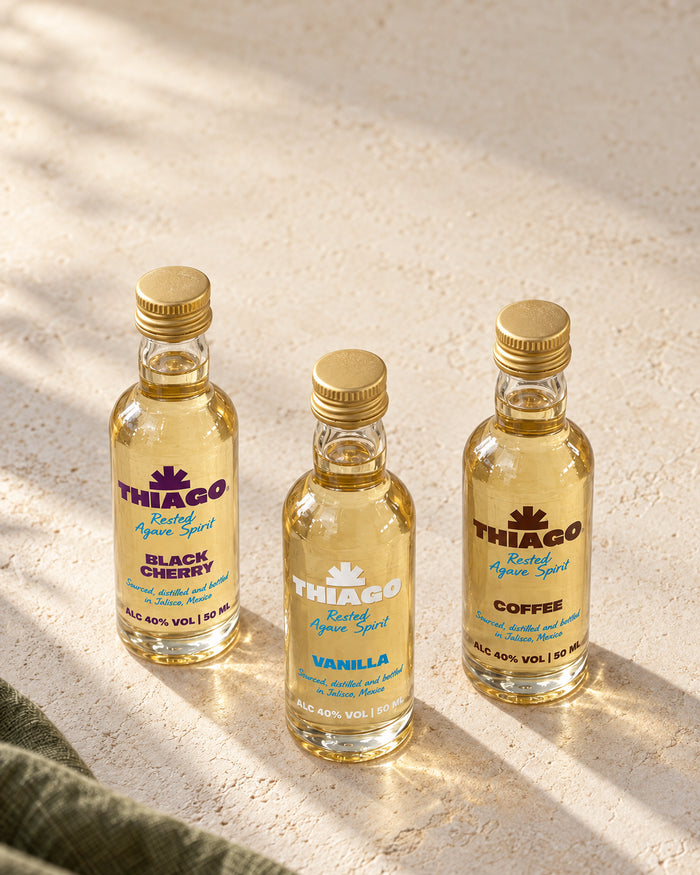
If you want to test the difference for yourself, our Reposado range is a clean place to start, and our 50ml Minis bundle lets you compare Coffee, Vanilla and Black Cherry side by side without committing to a full bottle. For responsible serving guidance, visit Drinkaware's drinking guidelines.
Frequently Asked Questions
What kind of additives are in tequila?
Tequila regulations permit four additives: glycerin (for texture), caramel colouring (for appearance), oak extract (for flavour and colour in aged tequilas), and sugar-based syrup or jarabe (for sweetness). Not all tequilas contain all of these. The label must disclose if any are present, though some producers choose to use none. Reading the ingredient statement and production notes tells you exactly what's in the bottle.
What does the NOM number on a tequila label mean?
The NOM (Norma Oficial Mexicana) number identifies the distillery that produced the tequila. Every bottle must display this four-digit number. It's your verification that the spirit was made at a regulated facility in the authorised tequila region. You can cross-reference the NOM number to confirm the distillery's reputation and production standards, giving you confidence in the producer's claims about sourcing and distillation methods.
What does 100% agave mean on a tequila label?
100% agave means the spirit is made entirely from blue agave sugars, with no other fermentable sugars added. Mixto tequila uses at least 51% agave and up to 49% other sugars. The 100% agave claim is a clear label marker that tells you the producer relied on agave quality rather than supplementary sugars, which typically results in a more complex flavour profile and fewer added sweeteners.
How can you tell if tequila is authentic by reading the label?
Check for the NOM number, which proves it was made at a regulated distillery in the authorised region. Look for the denomination of origin statement (usually in Spanish). Verify the alcohol content is listed at 40% ABV or higher. Authentic tequila labels disclose all ingredients and production notes. If the label is vague, lacks a NOM number, or makes unverifiable claims, that's a red flag. The Thiago range, for example, clearly states: "Thiago is 100% Blue Agave Reposado Tequila with natural Mexican flavours. 100% sourced, distilled and bottled in the Highlands of Jalisco at 40% ABV with zero added sugar."