Table of Contents
- What Is Reposado Tequila
- How Reposado Tequila Is Made: From Agave to Barrel
- Reposado Tequila Tasting Notes and Flavour Profiles
- How to Drink Reposado Tequila: The Proper Tasting Sequence
- Reposado vs. Blanco and Añejo: Understanding the Differences
- Serving Suggestions and Glassware
- Food Pairings for Reposado Tequila
- Terroir and Regional Impact on Flavour
Last Updated: August 14, 2026
What Is Reposado Tequila
Reposado tequila is a rested spirit between unaged blanco and deeply aged añejo. The term "reposado" means "rested", after distillation, it spends a minimum of two months in oak barrels, though premium producers like ThiagoTequilaCompany rest theirs for six months to develop complexity and smoothness.
Reposado's defining characteristic is balance. It captures bright, herbaceous agave notes whilst introducing vanilla, caramel, and spice from oak interaction, making it smooth enough to sip neat yet flavourful enough to anchor sophisticated cocktails.
Authentic reposado must be made from 100% Blue Agave, not blended with other sugars. Premium producers use traditional cooking methods and genuine barrel aging rather than diffusers and additives, which create synthetic tastes and harsh burns. A proper reposado shows light amber to golden hue from genuine oak exposure; nearly clear or artificially bright spirits indicate young spirits or additive treatment.
How Reposado Tequila Is Made: From Agave to Barrel
The Distillation Process
The journey begins with agave plants from Jalisco's highlands, where climate and soil develop deeper sugar content and complex flavour compounds. Harvesters select mature plants, typically seven to ten years old, and remove the piña (heart), weighing 40 to 90 kilograms.
Piñas are cooked using traditional brick ovens or autoclaves that steam the agave for hours, developing caramelised notes and natural sweetness. Some producers use diffusers, which extract sugars faster but strip subtle flavour compounds that distinguish premium reposado.
Once cooked, agave is crushed to extract juice, then fermented with yeast for five to seven days. Yeast converts sugars into alcohol whilst producing congeners, flavour compounds that give spirit its character. Temperature control during fermentation is critical; too warm and delicate aromatics are lost, too cold and fermentation stalls.
Distillation follows in copper stills. Most quality producers use pot stills, which preserve more of the agave's natural character. The distiller separates heads (harsh compounds), hearts (the good stuff), and tails (heavy, bitter notes), a decision directly affecting final smoothness.
The Aging Process and Barrel Types
After distillation, clear blanco spirit is transferred into oak barrels for a minimum of two months. Most premium producers age reposado for six months to develop deeper complexity.
Oak type matters enormously. American oak imparts vanilla, caramel, and sweet spice. French oak adds refined, subtle flavours with toasted wood hints. Ex-bourbon barrels add vanilla and slight sweetness; new charred barrels introduce aggressive wood tannins and colour.
Spirit and wood interact chemically. Oxygen penetrates the barrel, oxidising compounds in agave and oak. Vanillin from wood dissolves into the spirit, creating characteristic vanilla notes. Tannins add structure and slight drying sensation. Longer resting produces more pronounced changes.
Temperature and humidity significantly affect aging. Warmer conditions accelerate oxidation and extraction; cooler climates slow it down. The barrel breathes naturally: spirit expands into wood during warm periods and contracts during cool ones, maximising oak contact. This natural breathing produces more complex spirits than climate-controlled warehouses.
Colour deepens from clear to pale gold to amber entirely from oak, no caramel colouring or additives should be present in authentic reposado.
Reposado Tequila Tasting Notes and Flavour Profiles
Quality reposado opens with cooked agave, a sweet, slightly earthy foundation. Layered over that are oak-derived notes: vanilla is almost always present, along with subtle caramel, butterscotch, and toasted wood.
Many reposados show herbal undertones, hints of pepper, cinnamon, or mint, from the agave itself, indicating quality distillation. Some display citrus notes from fermentation.
The mid-palate reveals reposado's complexity: natural agave sweetness balanced against oak tannins' drying effect. Mouthfeel should be creamy and smooth, not harsh. A six-month aged reposado develops silky texture that coats the palate without burning.
The finish reveals true character. Well-aged reposado shows a long, pleasant finish with vanilla, subtle spice, and gentle warmth, fading gradually rather than abruptly.
Different expressions vary by terroir, barrel selection, and production methods. Lowland reposados often show citrus and tropical fruit notes; highland reposados tend toward herbal, peppery characteristics. American oak emphasises vanilla and sweetness; French oak adds refinement and subtlety.
How to Drink Reposado Tequila: The Proper Tasting Sequence
Tasting reposado properly isolates and appreciates each flavour component. Structure matters because your palate builds sensitivity progressively.
Step 1: Observe the Colour and Clarity
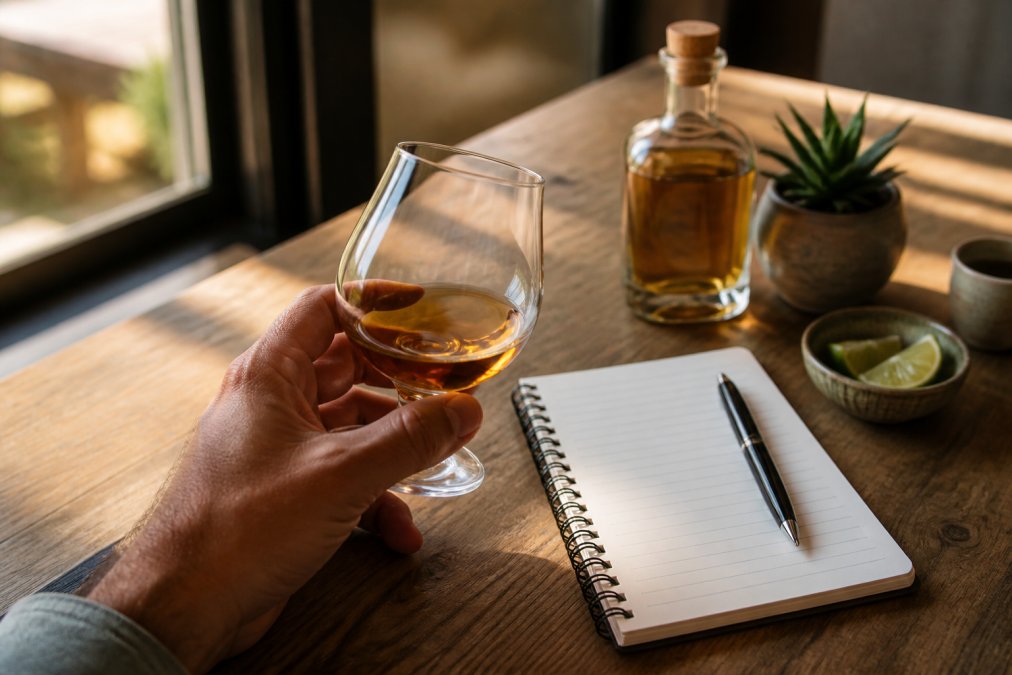
Pour roughly 30 millilitres into a tulip-shaped glass or snifter. Hold it to natural light and observe the colour. Genuine six-month reposado displays light amber to golden hue, consistent throughout with no cloudiness or sediment. Artificially bright or orange-tinted spirits indicate additives.
Tilt the glass and look through it. The spirit should be transparent, not hazy. Cloudiness indicates poor filtration or contamination.
Step 2: Assess the Aroma Profile
Bring the glass a few centimetres from your nose and breathe naturally. The first sniff detects volatile compounds: bright agave notes and alcohol burn. Wait ten seconds, then nose again, the second pass reveals subtle notes like vanilla, caramel, and spice from oak. A third pass often reveals deeper notes like herbal undertones or citrus.
Note what you smell to prepare your palate for what's coming.
Step 3: The First Sip and Mid-Palate
Take a small sip and let it coat your mouth before swallowing. Initial sensation should be warmth, not harsh burn. Sharp, unpleasant burn indicates improper aging or additives masking poor distillation.
Notice the sweetness, natural agave sweetness, not syrupy or cloying. Oak tannins should create slight drying sensation on your gums, balancing sweetness beautifully.
Pay attention to mouthfeel. Is it creamy and smooth, or thin and hot? Six-month aged reposado should feel silky on your tongue, indicating successful aging.
Step 4: Evaluate the Finish
After swallowing, notice what lingers. The finish should persist at least 30 seconds, gradually fading. You should taste vanilla, subtle spice, and perhaps caramel. Warmth should be pleasant, not aggressive.
A long, pleasant finish indicates quality distillation and proper aging. Short finish or harsh aftertaste suggests rushed or compromised production.
Between sips, reset your palate with water or a plain cracker before comparing multiple reposados or taking another sip.
Reposado vs. Blanco and Añejo: Understanding the Differences
The tequila spectrum is defined by aging time, each stage bringing distinct flavour characteristics and best uses.
try all three minis · £15.99 →
Blanco tequila (also called silver) is unaged or rested less than two months. It's the purest agave expression, bright, herbaceous, and crisp. Blanco works brilliantly in margaritas where agave character shines without oak influence. It's also the most affordable tier. For a clean, unaged expression, explore Thiago Organico Blanco.
Reposado tequila bridges the gap. Two- to twelve-month aging (most premium versions sit around six months) introduces oak character whilst preserving agave freshness. Reposado is the most versatile: smooth enough to sip neat, complex enough to anchor sophisticated cocktails, and balanced enough to pair with food.
Añejo tequila is aged at least one year, often three to five years or more. Extended aging deepens oak influence significantly. Vanilla, caramel, and spice dominate. Añejo is typically sipped neat, as oak character can overpower cocktails. It's also the most expensive tier.
Choose blanco for cocktails where you want pure agave expression, reposado for versatility and balance, and añejo for contemplative sipping. Reposado offers the sweet spot for most drinkers.
Serving Suggestions and Glassware
The glass you choose affects how you experience the spirit.
A snifter or tulip glass is ideal for sipping reposado neat. The narrow opening concentrates aromas; the bowl shape lets the liquid warm slightly in your hand, opening subtle flavour compounds. Pour 30 to 45 millilitres.
For cocktails, a rocks glass works well for spirit-forward drinks. A coupe glass suits more delicate cocktails. A highball glass is appropriate for longer drinks with mixers.
Temperature matters. Serve reposado at room temperature for neat sipping. If you prefer it over ice, use large cubes rather than crushed ice, large cubes melt slowly, preventing dilution that mutes character. For spritzes or longer drinks, chill your glass first by filling it with ice, then discard the ice before pouring.
Avoid strong perfumes or scented candles that compete with the spirit's aroma. Taste in natural light if possible. Take your time.
Food Pairings for Reposado Tequila
Reposado's balance of agave sweetness and oak spice makes it surprisingly food-friendly. Match the spirit's flavour intensity to the dish.
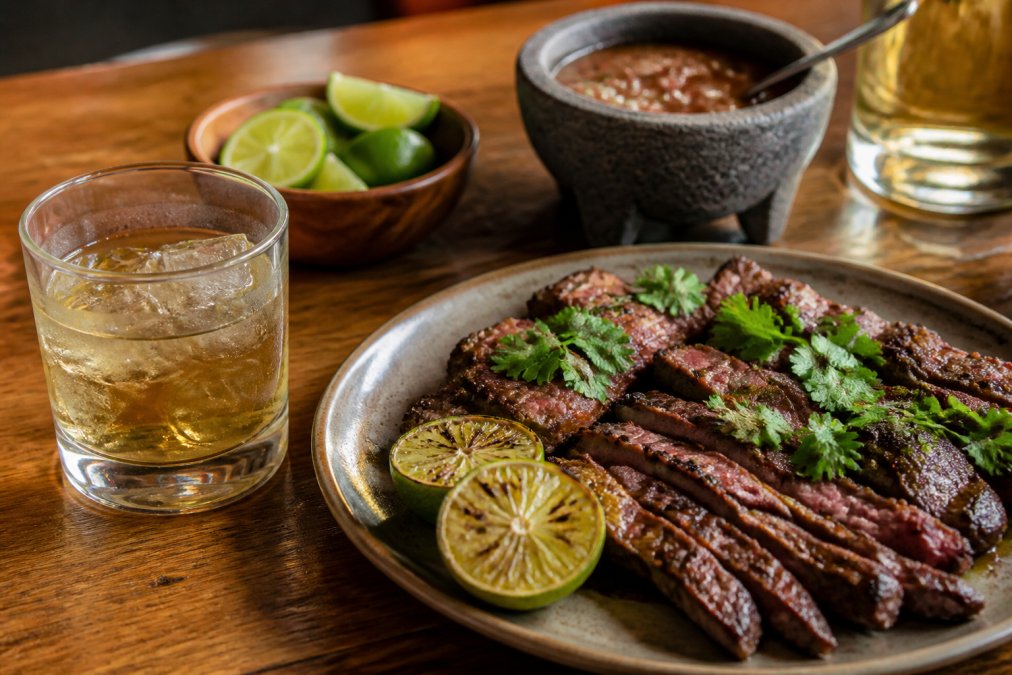
Grilled meats are a natural match. Carne asada, grilled chicken, or charred fish share reposado's slightly smoky undertones. Vanilla and caramel notes complement Maillard reaction flavours from the grill. Six-month reposado like ThiagoTequilaCompany's works particularly well because oak doesn't overpower delicate meat flavours.
Mexican cuisine beyond the obvious: mole, with its complex spice profile and subtle sweetness, echoes reposado's flavour structure. Chiles rellenos, where pepper heat is balanced by cheese and sauce, pairs beautifully with reposado's smooth mouthfeel. Even simple quesadillas with grilled vegetables work.
Seafood deserves consideration. Ceviche, with bright citrus and fresh fish, contrasts nicely with reposado's warmth and vanilla notes. Grilled shrimp with garlic and lime is another excellent pairing.
Cheese works better than expected. Aged cheddar contrasts beautifully with reposado's smoothness. Queso fresco lets the spirit's subtle notes shine. Avoid very soft cheeses that might get lost.
The principle is balance: match intensity to intensity, letting contrasting flavours highlight each other rather than compete.
Terroir and Regional Impact on Flavour
Terroir, soil, climate, and geography, shapes the spirit's final character as much as production technique.
Highland reposados from Los Altos (1,500-2,100 metres elevation) show cooler climate and mineral-rich volcanic soil producing agave with higher sugar content and complex flavour compounds. Highland reposados typically show peppery, herbal, and citrus notes, tending toward elegance and refinement. Longer growing seasons allow deeper flavour development.
Lowland reposados (below 1,500 metres) experience warmer climate accelerating agave maturation. Soil composition differs, producing plants with different sugar profiles. Lowland reposados often display tropical fruit notes, pineapple, mango, and tend toward rounder, sweeter profiles.
Water availability and mineral content also matter. Springs and groundwater carry distinct mineral signatures influencing fermentation and which flavour compounds yeast produces. Microclimate of individual distilleries matters too, valley facilities experience different temperature variations than slope locations, affecting how aging unfolds.
Understanding terroir explains why two identically aged reposados taste different. Neither is better; they're different expressions of their origin. Highland reposado suits those preferring peppery, herbal spirits. Lowland reposado appeals to those favouring rounder, fruitier profiles.
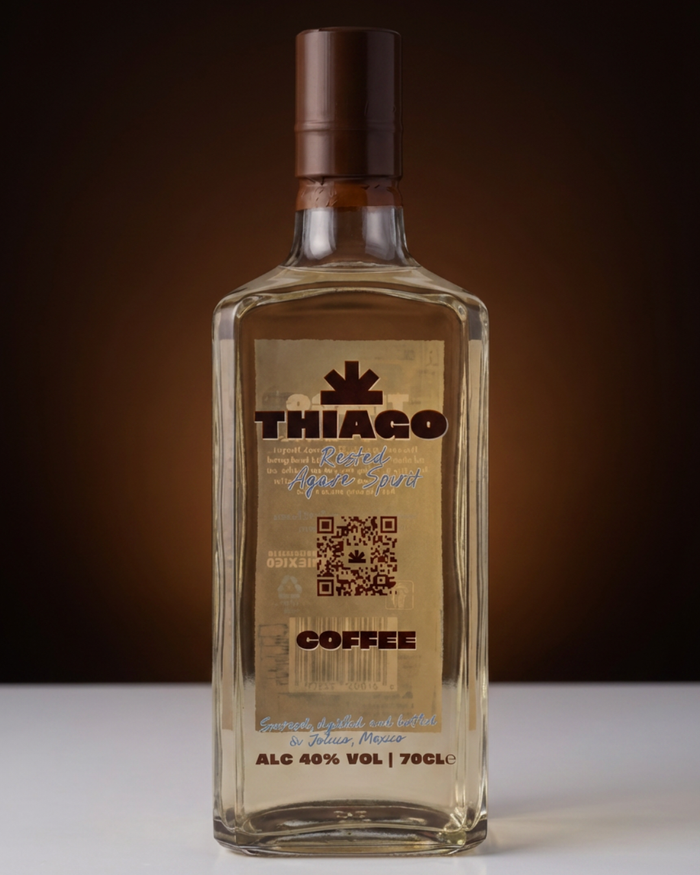
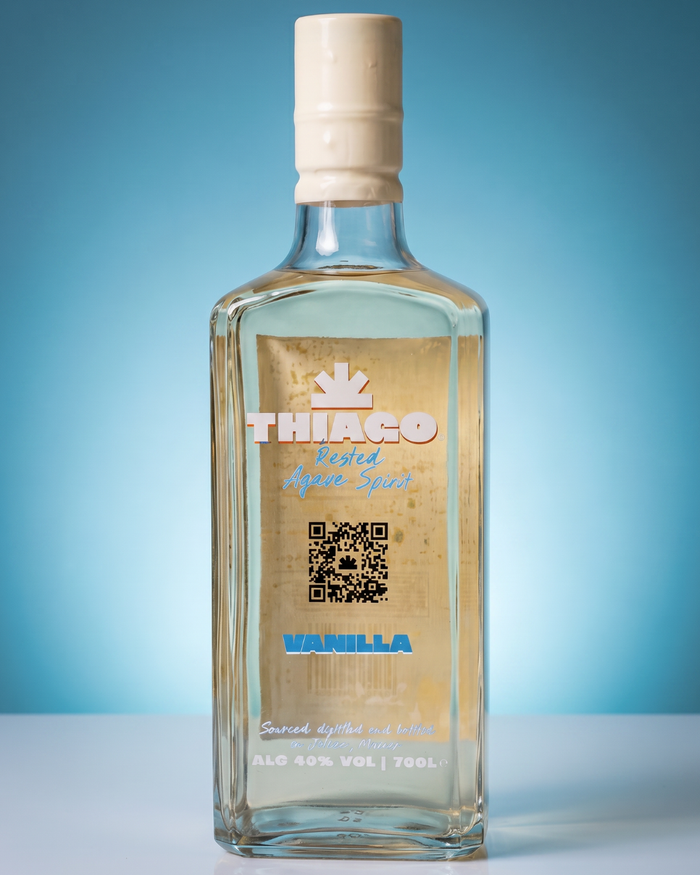
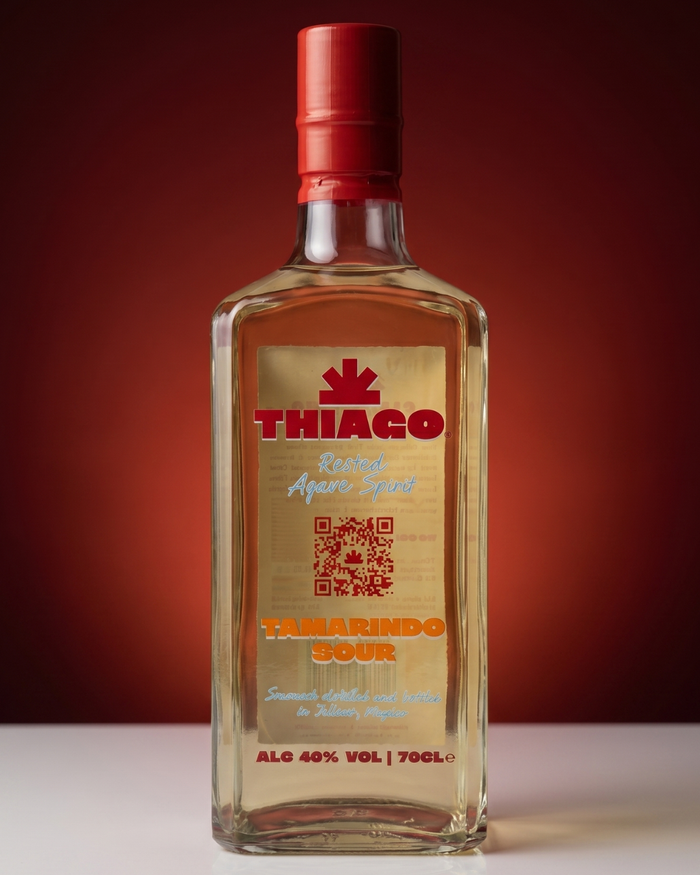
Reposado tequila rewards attention. Understanding how it's made, how to taste it properly, and how to serve it transforms the experience from casual drinking into genuine craft appreciation. The difference between mass-market spirits and authentic, carefully aged reposado becomes immediately obvious once you know what to look for. Start with ThiagoTequilaCompany's six-month aged expressions, their commitment to 100% Blue Agave and real Mexican ingredients means you're tasting genuine reposado, not synthetic approximation. Try the Thiago Tequila 3 Pack at £15.99 with free delivery to explore their range — including Coffee, Black Cherry, and Vanilla — or invest in a full bottle like the Tamarindo Sour Reposado to experience how authentic ingredients create complexity that mass-market alternatives simply cannot match.


| Tequila Type | Aging Period | Best Use | Flavour Profile |
|---|---|---|---|
| Blanco | Unaged or <2 months | Cocktails, margaritas | Bright, herbaceous, crisp agave |
| Reposado | 2-12 months | Sipping neat or cocktails | Balanced agave, vanilla, caramel, spice |
| Añejo | 1-5+ years | Sipping neat | Deep oak, vanilla, caramel dominate |
Frequently Asked Questions
What is the best way to enjoy reposado tequila?
The best way depends on your preference. Reposado tequila can be sipped neat at room temperature to appreciate its full flavour complexity, enjoyed over ice for a slightly cooler experience, or used as the base for sophisticated cocktails. Many enthusiasts recommend starting with a small pour neat, allowing the spirit to open up for 30 seconds, then taking a measured sip to evaluate the aroma profile, mid-palate, and finish. This methodical approach reveals the vanilla, caramel, and baking spice notes that develop during the six-month barrel resting period.
How does reposado tequila differ from blanco and añejo?
Reposado sits between blanco and añejo in both aging time and flavour intensity. Blanco (unaged or rested less than two months) offers bright, grassy agave notes with minimal oak influence. Reposado rests for two to twelve months in oak barrels, developing vanilla, caramel, and toasted agave characteristics while retaining agave's natural sweetness. Añejo ages for one to three years, creating deeper wood influence, richer mouthfeel, and more pronounced tannins. Reposado balances agave authenticity with subtle oak complexity, making it ideal for both sipping and mixing.
What should I look for in an authentic reposado tequila?
Authentic reposado must be 100% Blue Agave and aged in oak barrels for at least two months. Check the label for 'Denominación de Origen Protegida' certification, which guarantees production in Mexico's designated tequila region. Avoid spirits with added syrups or artificial sweeteners; genuine reposado derives its natural sweetness from cooked agave alone. The colour should be golden to amber, indicating proper barrel interaction. Taste for smooth mouthfeel without harsh alcohol burn, and look for flavour complexity including vanilla, caramel, baking spice, and citrus notes rather than one-dimensional sweetness.
Is reposado tequila considered premium or top-shelf?
Reposado occupies the premium category, positioned above entry-level blanco but typically below ultra-premium añejo. Its six-month barrel resting and resulting flavour complexity justify a higher price point than unaged spirits. However, 'premium' depends on craftsmanship and sourcing rather than age alone. A well-made reposado from highland regions like Jalisco, distilled with care and bottled at 40% ABV without additives, delivers exceptional quality for sipping neat or in cocktails. Many discerning drinkers prefer quality reposado over aged spirits because it balances refinement with the authentic agave character that defines great tequila.
Can reposado tequila be enjoyed on the rocks, or should it be sipped neat?
Reposado tequila works beautifully both ways. Neat or at room temperature, you experience the full aroma profile, mid-palate complexity, and finish without dilution. Over ice, the chill slightly mutes the spirit's warmth, making it more approachable for those sensitive to alcohol heat while still preserving vanilla, caramel, and baking spice notes. Many prefer neat for serious tasting sessions and on the rocks for casual evening enjoyment. The key is using quality ice that melts slowly, avoiding rapid dilution that would obscure the flavours developed during barrel resting.
What flavour notes should I expect from reposado tequila?
Reposado tequila typically exhibits a complex aroma profile combining agave and oak influences. Expect vanilla and butterscotch from white oak barrel interaction, caramel and toasted agave sweetness from the cooked agave, baking spice including cinnamon bark undertones, and subtle citrus or herbal notes. The mid-palate should feel creamy and smooth, with balanced sweetness and mild tannins from wood contact. The finish varies by terroir and barrel type but generally includes lingering vanilla, spice, and a clean, warm conclusion without harsh burn. Premium reposado crafted with real Mexican ingredients rather than syrups delivers authentic flavour complexity that rewards careful tasting.
Does the barrel type affect the taste of reposado tequila?
Yes, barrel type significantly influences flavour. White oak barrels, the traditional choice, impart vanilla, butterscotch, and subtle spice notes while allowing agave character to remain prominent. Some producers use ex-bourbon barrels, which add deeper vanilla and caramel notes along with slightly more tannins. French oak barrels introduce more refined, elegant wood influence with softer tannins. The barrel's previous contents, toast level, and age all affect oxidation rates and flavour extraction. Highland terroir combined with careful barrel selection determines whether reposado develops balanced oak complexity or becomes overly woody, making barrel choice critical to authentic flavour.
This article was written using GrandRanker