Table of Contents
- Why 100% Blue Weber Agave Is the First Quality Marker
- How to Read a Tequila Label: NOM Numbers, Age Statements and Additives
- Tequila Additives Explained: What Hides Behind Artificial Flavourings
- Production Methods That Separate Craft Spirits From Mass-Market Bottles
- The 100% Blue Agave Tequila Benefits You Can Actually Taste
- Finding the Best Flavoured Tequila UK Drinkers Can Trust
- Tequila Minis for Festivals: Quality You Can Carry
- Frequently Asked Questions
Last Updated: September 11, 2026
Why 100% Blue Weber Agave Is the First Quality Marker
Learning how to identify high quality tequila starts with one line on the label: 100% Blue Weber Agave, the first marker of high quality tequila. That phrase is the single most reliable quality marker in the category, and at Thiago Tequila we build every bottle around it. Tequila is a protected spirit; by Mexican law it can only be made from Blue Weber Agave in designated regions, and the Jalisco highlands are where the best of it grows. If the label says "tequila" without "100% agave", you are almost certainly holding a mixto.

Mixto vs 100% Agave: What the Label Really Tells You
Mixto is tequila where up to 49% of the fermentable sugar comes from something other than agave, usually cane sugar or corn syrup. It is legal, it is common, and it is why so many drinkers think tequila is harsh.
A 100% agave bottle carries only agave sugar, which is why it tastes rounder and finishes cleaner. Check the small print on the back label, not the front. The words "100% de agave" must appear there.
How to Read a Tequila Label: NOM Numbers, Age Statements and Additives
The fastest way to judge a bottle is to read four things: the agave percentage, the NOM number, the age statement, and the additive disclosure. Most shoppers check none of them. Ninety seconds with the label tells you more than any shelf-talker ever will.
- Agave content: "100% de agave" or nothing. If those words are absent, assume mixto.
- NOM number: a four-digit code identifying the distillery that actually made the liquid.
- Age statement: Blanco (unaged), Reposado (rested a minimum of two months), Añejo (minimum one year), Extra Añejo (minimum three years).
- Additives: legally permitted up to 1% of total volume, and rarely declared on the front.
Using the NOM Database to Verify Your Bottle
Every legal tequila carries a NOM number, the distillery's registration with the Consejo Regulador del Tequila (CRT), the body that enforces the spirit's denomination of origin. The number is usually printed near the barcode or on the back label as "NOM" followed by four digits. This is the step most guides skip, and it is the one that separates a marketing story from a paper trail.
Here is the workflow:
- Find the NOM number. Look on the back label, near the barcode, or on the base of the bottle. It reads as NOM plus four digits, for example NOM 1234.
- Open the CRT's public distillery register at crt.org.mx. The site is in Spanish, but the search field accepts the four-digit number directly.
- Read the distillery record. You will see the registered name, the municipality (highland towns like Arandas and Atotonilco versus lowland towns like Tequila and El Arenal), and the brands authorised to use that NOM.
- Cross-check the brand list. If the bottle in your hand is not on the authorised list, something is wrong. If it is, you now know exactly which facility made it.
Two bottles with the same NOM number come from the same facility, however different their marketing looks. A craft house typically holds one or two NOMs and a short brand list. A large industrial plant can hold several NOMs and dozens of brands, which is why a supermarket own-label and a "premium" bottle can share a production line. That is not automatically bad, but it tells you what you are paying for.
Consejo Regulador del Tequila official site
Age Statements: What the Words Actually Guarantee
"Reposado" guarantees a minimum of two months in oak. It does not guarantee six, and it does not guarantee the barrel was new, or that the spirit was not filtered back to clear afterwards. "Añejo" guarantees at least a year. "Extra Añejo" guarantees at least three. Anything beyond those minimums is the producer's choice, and the good ones tell you. If a bottle says "rested six months in white oak", that is a specific claim you can hold them to, and it is the kind of detail that separates a producer proud of its process from one hiding behind a category name.
Tequila Additives Explained: What Hides Behind Artificial Flavourings
Additives are where "smooth" gets manufactured. Glycerin adds body and a false sense of roundness. Caramel colouring fakes the golden hue of oak ageing. Artificial flavouring and sweeteners mask a rough distillate. None of this has to be printed on the label.
A common mistake is assuming a vanilla or caramel note means barrel time. Often it means a syringe. The tell is a flavour that sits flat and sweet on top of the spirit rather than moving through it. Genuine agave character shifts as you sip; added flavour stays put.
Production Methods That Separate Craft Spirits From Mass-Market Bottles
How the agave is cooked and crushed decides more about flavour than any other step. Slow methods cost money and time; fast methods make neutral spirit at volume. But cooking and crushing are only half the story, the still room is where the character is either protected or stripped out, and almost no guide explains it.

Tahona, Stone Oven and Autoclave: What Each Method Does to Flavour
A tahona is a large stone wheel, traditionally pulled by a horse or mule, that crushes cooked agave slowly, separating juice from fibre gently and preserving delicate aromatics. Stone ovens cook agave over many hours, often a full day or more, developing caramelised, earthy notes as the sugars convert. An autoclave is a pressurised steamer that does the same job in a fraction of the time, and a diffuser strips agave sugars with hot water and acid in a continuous flow, producing clean but characterless spirit.
Craft producers accept lower yield for more flavour. Mass-market plants accept the reverse. Taste the difference in the finish: tahona and stone-oven tequilas linger; diffuser spirit disappears.
Copper Pot Stills vs Stainless Steel Columns
After fermentation, the spirit is distilled, usually twice, and the equipment matters as much as the oven.
A copper pot still runs in batches. Copper reacts with sulphur compounds in the distillate and pulls them out, which is why pot-still spirit tastes rounder and more expressive. The distiller also makes a cut: separating the heads, the hearts and the tails. The hearts, the clean, flavourful middle run, go into the bottle. Heads and tails are recycled or discarded. A careful cut is the single biggest lever a distiller has over quality, and it is invisible on the label.
A stainless steel column still runs continuously. It is faster, cheaper and produces a very high-purity, very neutral spirit. That neutrality is the point for industrial producers: it is a blank canvas that can be flavoured, sweetened or coloured into consistency across millions of bottles. It is also why so much cheap tequila tastes the same.
try all three minis · £15.99 →
Most 100% agave tequila is double-distilled. Some craft producers distil a third time, or distil in copper for the first pass and stainless for the second to balance character against purity. None of this is regulated, the denomination of origin sets minimums, not methods, so the only way to know is to read the producer's own account of their process, or to taste for the markers: a pot-still tequila has texture and a long finish; a column-still tequila is clean, light and short.
Why This Matters When You Are Buying Flavoured
Flavoured tequila is where production shortcuts hide best, because added sweetness and fruit can mask a thin distillate. That is why the base matters more, not less. A flavoured expression built on a rested, pot-distilled 100% agave spirit will taste like fruit layered over agave; one built on column-still neutral spirit and syrup tastes like a sweet drink with a burn. The same test applies: does the flavour move with the spirit as you sip, or sit flat on top of it?
The 100% Blue Agave Tequila Benefits You Can Actually Taste
The benefits of 100% blue agave tequila are sensory, not theoretical. Agave sugars ferment into a spirit with natural sweetness, herbal notes and a clean, warm finish. There is no cane-sugar harshness because there is no cane sugar.
Terroir matters here too. Highlands agave tends to be larger, sweeter and fruitier; lowlands agave leans more herbaceous. That is why a Highland Reposado can be sipped neat without a grimace.
Finding the Best Flavoured Tequila UK Drinkers Can Trust
Flavoured tequila has a reputation problem, and it is deserved. Much of it is mixto spirit plus syrup, which is why it tastes like sweets and burns like regret. The best flavoured tequila avoids that trap by starting with real 100% agave spirit and real ingredients.
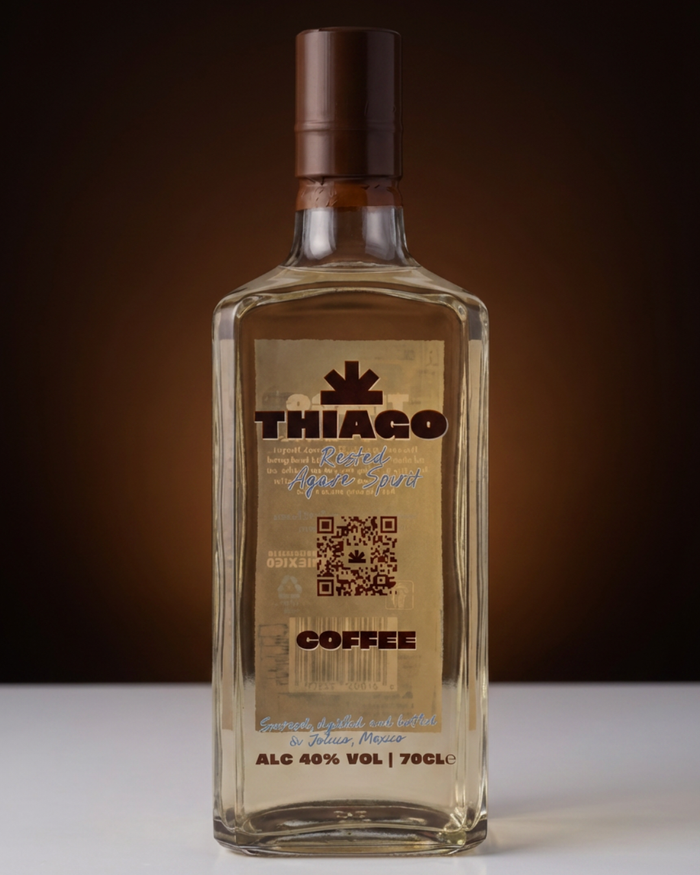
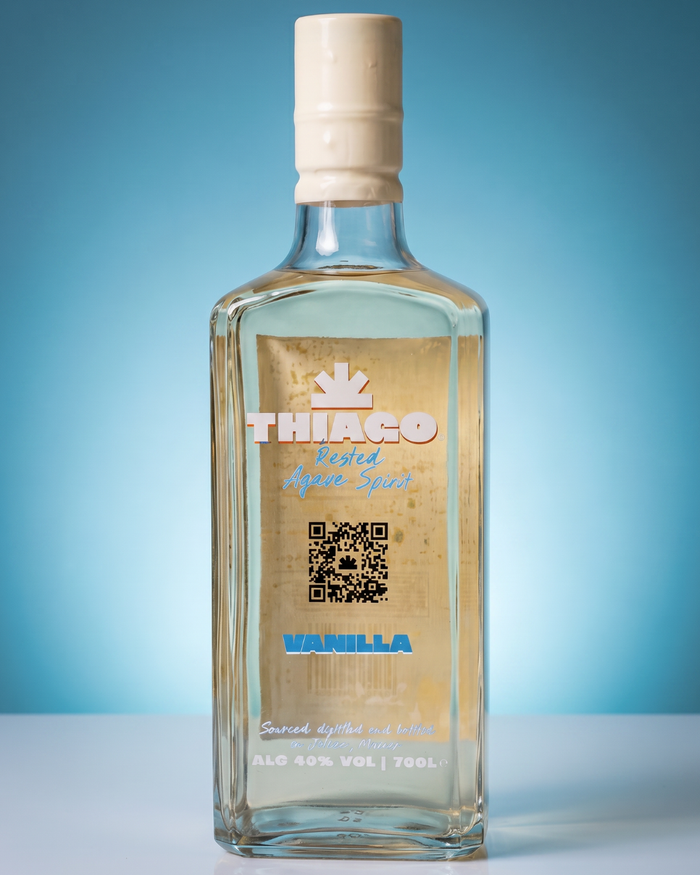
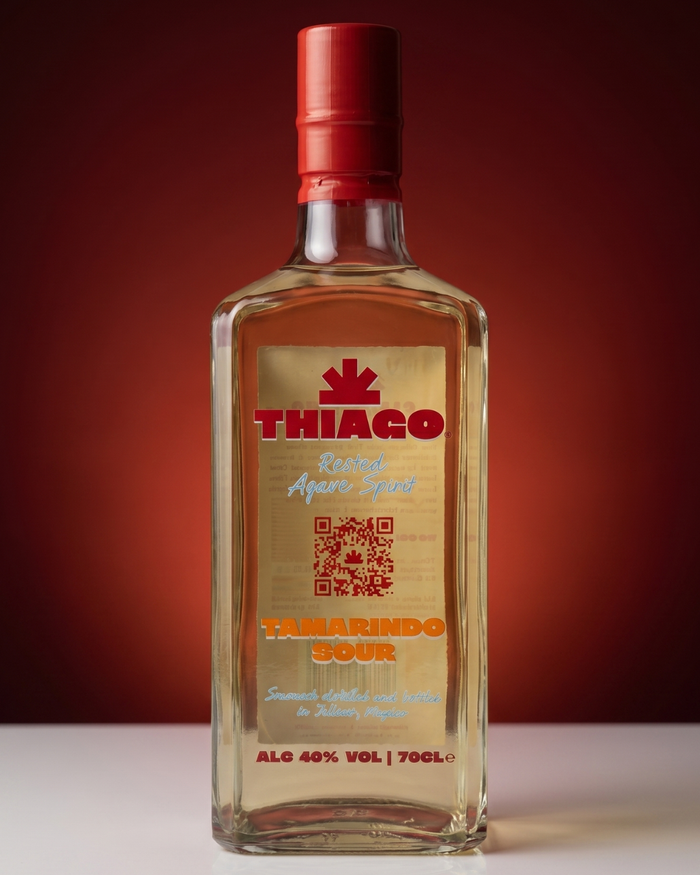
That is the approach behind our Black Cherry Tequila, a 100% Highland Blue Agave Reposado rested six months in white oak, then infused with locally sourced black cherry and nothing else. No added sugar, no syrup, 40% ABV. The same method runs through our Thiago tequila range, from Vanilla to Coffee, each built on the same six-month rested base.
UK alcohol labelling and licensing guidance
One customer put it plainly: "To find a flavoured tequila with no sugar that doesn't taste synthetic is an UTTER revelation." That is the whole argument for reading labels before you buy.
Tequila Minis for Festivals: Quality You Can Carry
Festival season exposes a gap: good tequila rarely travels well. Full bottles are heavy, glass is fragile, and a 70cl bottle will not clear cabin baggage. Tequila minis for festivals solve all three problems at once.
At 50ml, minis are plane baggage friendly and slip into a jacket pocket or day bag. Ours come as a three-pack so you can sip, spritz or cocktail on the go, and free delivery applies on mini packs. For a weekend away with friends, it is the difference between settling for whatever the bar stocks and drinking what you actually like.
UK government guidance on carrying liquids in hand baggage
| Use Case | Best Format | Why It Works |
|---|---|---|
| Festival | 50ml minis | Light, unbreakable to pack, no glass risk |
| Flight | 50ml minis | Fits cabin liquid allowances |
| Home sipping | 70cl bottle | Better value per pour |
| Cocktails | 70cl bottle | Enough volume for a full round |
Judging tequila by the bottle rather than the marketing takes about ninety seconds once you know what to look for: 100% agave, a checkable NOM number, an honest age statement and a production method worth paying for. The hard part is finding a flavoured bottle that passes those tests. Thiago Tequila makes that easy with 100% Highland Blue Agave Reposado, real Mexican ingredients instead of syrup, zero added sugar and a full 40% ABV, available as 70cl bottles or a three-pack of 50ml minis with free delivery on mini packs. Try all three minis for £15.99 and taste what additive-free actually means.
Frequently Asked Questions
How can you tell if tequila is 100% blue agave?
Check the label for '100% de agave' or '100% Blue Weber Agave' printed clearly, not just 'made with agave'. Look for the NOM number and the CRT (Consejo Regulador del Tequila) certification mark. If the label says 'mixto' or simply 'tequila' without the 100% designation, it contains added sugars from other sources. High quality tequila always states 100% agave prominently.
Does the colour of tequila indicate quality?
No. Colour only tells you how long the spirit aged. Blanco is clear, Reposado picks up pale gold from oak, and Añejo turns amber. Caramel colouring can be added to fake darker tones, so colour alone proves nothing about quality. A pale Reposado from a reputable distillery can outperform a dark, artificially coloured bottle every time.
What additives should I look out for in tequila?
The main additives are glycerin (for sweetness and mouthfeel), caramel colouring (for appearance), and artificial flavourings. These are legal in small amounts but mask poor spirit quality. Look for bottles that state 'additive-free' or use real ingredients like natural Mexican vanilla bean or black cherry rather than syrups. A clean, agave-forward taste with no cloying sweetness is your best indicator.
Is expensive tequila always better quality?
No. Price reflects branding, packaging and distribution as much as production quality. A £30 bottle from a small highland distillery using stone ovens can beat a £70 mass-produced brand. Focus on verifiable markers: 100% Blue Weber Agave, a traceable NOM number, traditional production methods, and whether the distillery uses real ingredients or syrups.