Table of Contents
- What Makes a Tequila Alternative for Sipping Worthy?
- Best Non-Alcoholic Tequila for Sipping Neat
- Flavor Profiles: Agave, Citrus, and Spice
- Sugar Content and Caloric Comparison
- Is Non-Alcoholic Tequila Worth It?
- How to Serve and Pair Tequila Alternatives
- Storage and Shelf-Life After Opening
- Conclusion
Last Updated: August 16, 2026
What Makes a Tequila Alternative for Sipping Worthy?
A quality tequila alternative for sipping must deliver three things: authentic agave character, smooth mouthfeel without harsh alcohol burn, and genuine flavour depth that holds up when enjoyed neat or over ice. Most spirits claiming to be tequila alternatives fail on at least one count, they taste thin and synthetic, or they burn like cheap vodka.
At ThiagoTequilaCompany, we've built our entire approach around this principle: a tequila alternative for sipping needs proper blue agave, proper oak resting, and real Mexican ingredient infusions, never syrups or artificial flavouring. That foundation determines whether you're drinking something sophisticated or something assembled in a lab.
The mouthfeel and alcohol burn problem
Alcohol burn is the reason most people don't enjoy sipping spirits neat. When ethanol hits your palate at full strength without proper preparation, it creates a sharp, unpleasant sensation that overshadows flavour. A proper tequila alternative should coat your mouth with warmth and texture rather than attack it.
Mouthfeel comes from the base spirit's age and barrel treatment, plus natural compounds from infusions. A spirit rested in oak for six months develops oils and tannins that add body. Real vanilla, cherry, or coffee infusions add viscosity that synthetic flavourings can't replicate. Many alternatives skip ageing or use cheap neutral spirits as a base, neutral spirits have almost no mouthfeel. A tequila alternative for sipping needs that oak-aged character baked in.
Why blue agave matters for smooth spirits
Blue agave isn't marketing language, it's the difference between a spirit that tastes like tequila and one that tastes like flavoured vodka. Blue agave has a naturally sweet, slightly peppery character that comes through after distillation. Starting with 100% blue agave means beginning with a spirit that already has personality and depth.
The agave plant contains compounds that contribute to smoothness, textural elements that make the spirit feel fuller on the palate. A spirit made from blue agave feels different in your mouth than one made from neutral grain. It has weight, presence, and subtle earthiness. For sipping, every element of the base spirit becomes part of what you taste.
Best Non-Alcoholic Tequila for Sipping Neat
The term "non-alcoholic tequila" is technically misleading, true tequila contains alcohol by definition. What the market calls "non-alcoholic tequila" is usually a zero-proof spirit alternative designed to mimic tequila's flavour profile without ethanol. These products have improved dramatically, but they come with real limitations.
Zero-proof spirit alternatives and their limitations
Zero-proof spirits are made by removing alcohol from a base spirit or by starting with a flavoured botanical blend and skipping fermentation entirely. The appeal is obvious: you get the social ritual and flavour without intoxication or next-day effects.
The limitation is equally obvious: alcohol contributes to mouthfeel, flavour depth, and the sensation of sipping a spirit. Without it, even well-made zero-proof alternatives feel thinner and more diluted. They work well in cocktails where other ingredients add body. For neat sipping, they struggle to compete with proper spirits. Many rely on added sweeteners or intense spice profiles to compensate, creating artificial or one-dimensional flavours.
Why alcohol-free doesn't mean flavour-free
The best alcohol-free alternatives don't try to be perfect tequila replicas. Instead, they aim for the same sensory experience, warmth, complexity, sipping-worthy depth, through different means. They use concentrated agave nectar, real spice infusions, and carefully selected botanicals to create texture and interest.
Most people who say they want "non-alcoholic tequila for sipping" actually want a low-alcohol or full-strength spirit without harsh burn. That's a different category. If you're genuinely avoiding alcohol, a quality zero-proof alternative can be worthwhile. If you're just avoiding the burn, you're better served by a proper aged tequila alternative crafted for smoothness. A tequila alternative containing alcohol will always outperform a zero-proof version for neat enjoyment.
Flavor Profiles: Agave, Citrus, and Spice
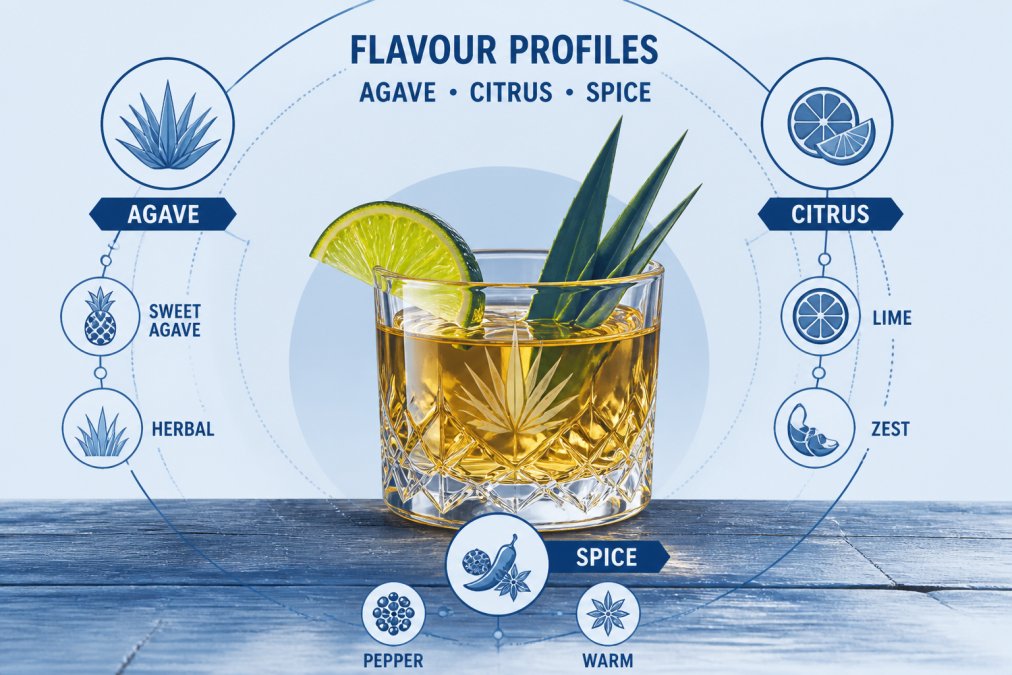
A proper tequila alternative for sipping should offer layered flavours that evolve as you drink it. The initial taste might be bright and citrusy, the mid-palate reveals agave sweetness and earthiness, and the finish lingers with subtle spice or vanilla warmth.
Blanco-style spirits with earthy and citrus notes
Unaged blanco-style spirits are bright and fresh, with prominent citrus and herbal notes. These work well for sipping if made from quality blue agave and distilled carefully. The advantage of blanco is that you taste the agave directly, there's nowhere for poor quality to hide.
Look for spirits showing peppery agave aroma and citrus zest without artificial sharpness. The finish should be clean and warm, not harsh. The Thiago Organico Blanco Tequila (£48.00) is a certified organic option delivering this profile. It's unaged, so you get pure agave character without oak influence. Fresh, floral, and citrus notes come through clearly with a clean finish that lingers without burning.

Reposado alternatives with vanilla and peppery finish
Reposado spirits are aged in oak for six months, softening sharp edges and adding vanilla, caramel, and spice notes. This is where a tequila alternative for sipping truly shines. Oak ageing creates the mouthfeel that makes sipping enjoyable, while infusions add complexity.
A quality reposado should feel silky on the palate with a warm, lingering finish. Vanilla and oak notes should be subtle but present. Any peppery spice should come from real chilli or black pepper, not artificial flavouring.
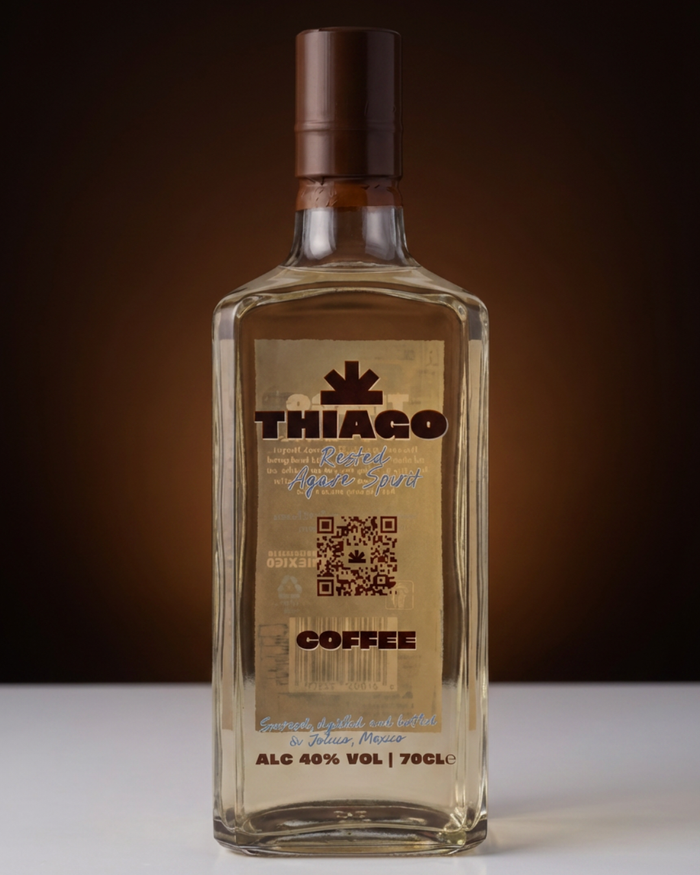
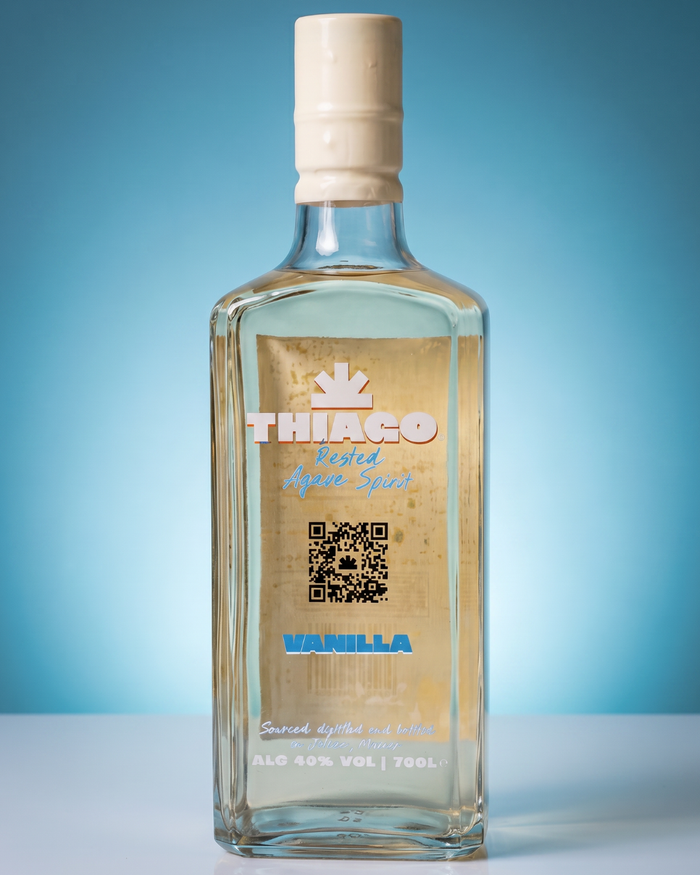
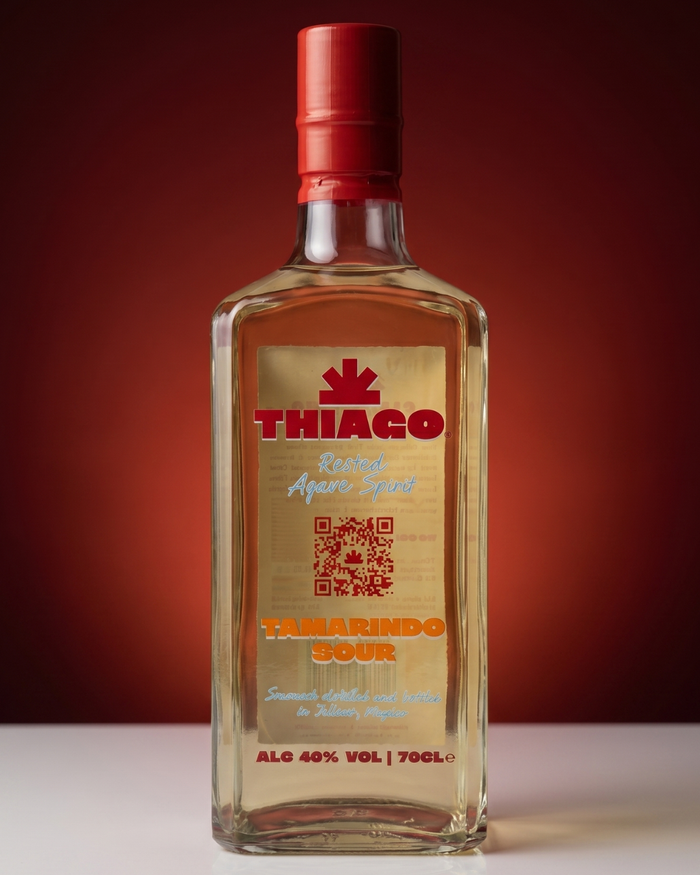
Thiago's reposado range demonstrates what this category achieves. The Thiago Black Cherry Tequila (£54.99) is 100% Highland Blue Agave Reposado rested six months in white oak, then infused with locally sourced black cherry. It's silky enough to drink straight with no ice, yet bold enough to transform a margarita. Zero added sugar means sweetness comes from agave and fruit, not syrups. The Thiago Vanilla Tequila (£54.99) introduces natural Mexican vanilla bean for warmth and depth. The Thiago Coffee Tequila (£54.99) offers natural, locally sourced coffee that lingers without bitterness. The Thiago Tamarindo Sour Tequila (£59.99) is a limited release showing the range possible, tamarind is bold and tangy, sweet, sour, and slightly spicy all at once, creating a spirit with genuine character and depth.
Sugar Content and Caloric Comparison
One of the biggest misconceptions about flavoured spirits is that they must contain added sugar. Many do, particularly cheap versions relying on syrups. But properly made alternatives use real ingredients and agave's natural sweetness, meaning significantly lower sugar content.
A typical flavoured spirit with added syrup contains 5-8 grams of sugar per 50ml serving. A quality alternative made with real ingredients typically contains less than 1 gram per serving. The difference becomes obvious over an evening, the sugar alternative leaves you feeling heavy and sluggish, while the real-ingredient version doesn't.
try all three minis · £15.99 →
Thiago's range is explicitly sugar-free. No added sugar means sweetness comes from agave itself and real infused ingredients. This matters not just for calories, but for how the spirit tastes and affects you. Real fruit and spice flavours are more complex and satisfying than sugar-sweetened alternatives, so you're more likely to enjoy sipping them slowly.
Is Non-Alcoholic Tequila Worth It?
This depends entirely on what you're looking for. If you want to avoid alcohol entirely, a quality zero-proof alternative is legitimate and genuinely interesting when well-made. If you want a spirit you can sip without harsh burn, you don't need "non-alcoholic" tequila. You need a proper tequila alternative for sipping crafted for smoothness.
Value for money versus craft quality
The cheapest tequila alternatives are made from neutral spirits with artificial flavouring and added sugar. You get what you pay for, a spirit that tastes thin and artificial.
Mid-range alternatives show real quality. They use proper base spirits, real ingredients, and careful infusion techniques. The price jumps noticeably, but so does the experience. Premium alternatives like Thiago's range are at the top of this scale. A 70cl bottle at £48-£59 reflects the cost of sourcing blue agave from Jalisco, ageing in oak, and infusing with real Mexican ingredients. When you compare cost per serving to what you'd pay for a quality spirit in a bar (£12-£16 per cocktail), a 70cl bottle giving ten 50ml servings becomes reasonable.
When to choose alternatives over traditional spirits
Choose a tequila alternative for sipping if you want something smoother and more interesting than standard tequila, or if you're drawn to available flavour profiles. Choose it if you appreciate craft and origin, knowing exactly where your spirit comes from and how it was made. Don't choose it purely for price, a basic blanco tequila is cheaper and perfectly respectable. Choose an alternative because you want something better.
How to Serve and Pair Tequila Alternatives
The whole point of a tequila alternative for sipping is that it's good enough to enjoy on its own terms.
Neat, on the rocks, or as a cocktail base
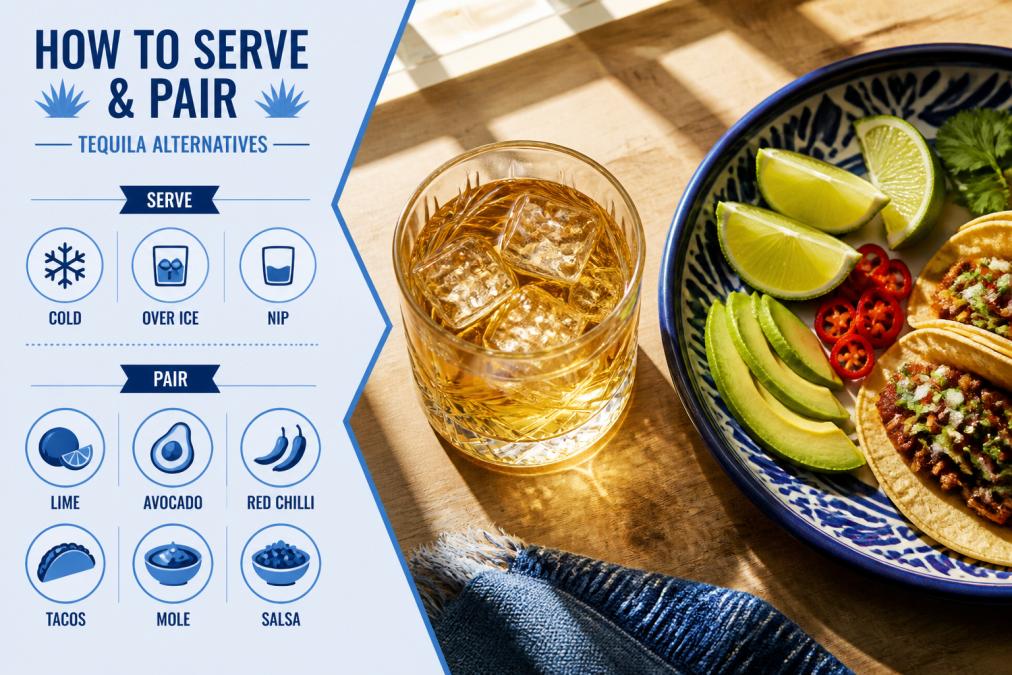
Neat means room temperature, no ice, in a proper spirit glass. This is the purest way to experience what you've bought. You taste every layer, the agave, oak, infusions, and finish.
On the rocks adds dilution and chill. The ice melts slowly, opening up the spirit and softening remaining sharpness. Many find this more approachable than neat.
As a cocktail base is where many alternatives truly shine. A tequila alternative for sipping crafted properly works beautifully in margaritas, palomas, and inventive cocktails. Quality alternatives add depth and character, while cheap alternatives taste thin and artificial.
Food pairing guide for premium sipping spirits
A tequila alternative for sipping pairs beautifully with Mexican and Latin American cuisine. Agave character complements rich, spiced dishes. Citrus notes work with seafood and ceviche. Vanilla and cherry infusions pair with desserts and chocolate.
For savoury pairings, think grilled meats with chilli rubs, enchiladas with mole sauce, or fresh ceviche with lime. Vanilla-infused alternatives work particularly well with churros, flan, or dark chocolate. Coffee-infused spirits are exceptional with coffee-based desserts or as a digestif. Match intensity, bold, spiced alternatives pair better with rich food than delicate blancos.
Storage and Shelf-Life After Opening
A properly sealed bottle of spirits keeps indefinitely. Once opened, spirits oxidise when exposed to air, which means flavour can shift over time. For a tequila alternative for sipping, where you're paying for nuanced flavour, storage matters.
Keep opened bottles upright in a cool, dark place away from direct sunlight and temperature fluctuations. A kitchen cabinet away from the stove is ideal. A sealed bottle should remain in good condition for several years after opening. If you're sipping slowly and want to preserve the spirit exactly as bottled, transfer it to a smaller bottle once half-empty to reduce air space and slow oxidation.
A tequila alternative for sipping is worth considering if you value smoothness, authentic ingredients, and the ability to enjoy a spirit neat without harsh burn. The market has moved beyond thin, synthetic-tasting alternatives. Quality options now exist that genuinely deserve a place in your home bar.
ThiagoTequilaCompany delivers exactly this. Their range of 100% Blue Agave Reposado Tequilas, sourced and distilled in the highlands of Jalisco, offers zero-sugar flavour profiles that work beautifully neat, over ice, or in cocktails. Real Mexican ingredients, black cherry, vanilla, coffee, tamarind, replace syrups, so you're tasting actual flavour, not sweetness. Try all three minis for £15.99 with free delivery, or commit to a full 70cl bottle at £48-£59. Either way, you're getting a spirit crafted for sipping, not just mixing.

Frequently Asked Questions
What is the smoothest tequila alternative for sipping neat?
The smoothest tequila alternatives for sipping are typically 100% blue agave reposados rested in oak barrels for 6 months or longer. These spirits develop a silky mouthfeel and reduced alcohol burn compared to unaged blancos. Look for naturally flavoured options without added syrups or artificial sweeteners, as these tend to create a harsher finish. Brands using real Mexican ingredients like vanilla, black cherry, or coffee deliver more sophisticated sipping experiences than synthetic-tasting spirits.
Is non-alcoholic tequila worth it compared to traditional spirits?
Non-alcoholic tequila alternatives can be worth it if you prioritise flavour complexity and zero-proof sipping. However, they differ fundamentally from traditional tequila in mouthfeel and finish. Traditional 40% ABV spirits offer a warmer, more sophisticated sensory experience on the palate. If you're health-conscious or abstaining, zero-proof alternatives deliver authentic agave and spice notes. For pure sipping pleasure without health restrictions, full-strength blue agave reposados typically offer superior depth and character at comparable price points.
Can you really drink tequila alternatives straight without harsh alcohol burn?
Yes, premium tequila alternatives designed for sipping are engineered to minimise alcohol burn through careful ageing and natural flavouring. Reposado spirits rested in white oak develop smoother, rounder flavours that integrate the 40% ABV rather than highlighting it. The key is choosing spirits infused with real ingredients (vanilla beans, citrus, coffee) rather than artificial additives. Drinking neat over ice also helps, as the cold slows the spirit's vapours and softens the initial burn, allowing the agave's natural sweetness to emerge first.
What's the difference between blanco and reposado tequila alternatives for sipping?
Blanco spirits are unaged and deliver bright, fresh citrus and peppery agave notes, ideal if you prefer crisp, vibrant flavours. Reposado alternatives spend 6 months in oak barrels, developing deeper, warmer characteristics with vanilla, caramel, and earthy undertones. Reposados are generally smoother and more approachable for neat sipping because the oak mellows the spirit's edges. Blancos work better in cocktails where their clean character shines. For pure sipping pleasure, reposados offer the more refined, sophisticated experience most discerning drinkers seek.