Pick up two bottles of tequila from any back bar in London and you might assume they're telling the same story: Mexico, agave, sunshine, and a good time. They're not. The gap between a bottle that genuinely reflects its origin, distillery, and craft, and one that simply borrows the aesthetic, is enormous. For cocktail enthusiasts and brand marketers alike, understanding what sits beneath the label transforms how you choose, sell, and talk about tequila. This article unpacks the regulatory, cultural, and commercial forces that shape tequila branding, and why those forces matter more than most people realise.
Table of Contents
- What defines tequila branding?
- Key regulatory markers and authenticity signals
- Premiumisation and market dynamics in tequila branding
- Brand stories: Case studies of effective tequila branding
- Tequila versus mezcal: What branding reveals
- Why memorable tequila branding is more than just a label
- Enhance your tequila experience with Thiago
- Frequently asked questions
Key Takeaways
| Point | Details |
|---|---|
| Branding goes beyond labels | True tequila branding combines legal authenticity, storytelling, and cultural heritage. |
| Regulatory cues matter | NOM numbers and agave content are essential for consumer trust in tequila brands. |
| Premium market drives trends | Growth in premium and super-premium tequila changes how brands present themselves. |
| Strategy fits each audience | Successful brands tailor their message to enthusiasts, marketers, and global drinkers. |
| Distinct from mezcal | Tequila branding focuses on consistency and prestige, while mezcal champions craft and diversity. |
What defines tequila branding?
With an appreciation for the need to look beyond the label, let's unpack what really defines tequila branding. At its core, tequila branding operates on two simultaneous tracks: identity and legal compliance. A brand cannot simply decide to call its spirit tequila. It must earn that designation through a strict set of rules governed by Mexico's Consejo Regulador del Tequila (CRT), the industry's regulatory body.
These rules shape everything from the bottle's label to the distillery's location. Branding that ignores or obscures these rules is not just misleading; it risks being counterfeit. And tequila counterfeiting is a genuine problem. Without proper verification, consumers can easily purchase spirits that misrepresent their origin, agave content, or production method.
Here are the foundational branding elements every genuine tequila must carry:
- NOM number: A four-digit code identifying the registered distillery. Multiple brands can share one NOM, meaning a single distillery may produce several different labels.
- Agave classification: “100% agave” means exactly that. A “mixto” only needs to contain a minimum of 51% agave sugars, with the rest often made up of cane sugar.
- Denomination of Origin (DOT): Tequila can only be produced legally in Jalisco and a handful of municipalities in Guanajuato, Michoacán, Nayarit, and Tamaulipas.
- Category declaration: Blanco, reposado, añejo, and extra añejo must be clearly stated, each reflecting a different ageing period and flavour profile.
“Branding is where culture meets compliance. In tequila, the two are inseparable. A label that obscures its NOM or agave content is not just a marketing failure; it’s a trust failure.”
Pro Tip: When assessing any tequila brand, look for the NOM number and “100% agave” on the label before anything else. These two markers alone tell you more about the spirit’s quality and authenticity than any lifestyle imagery ever could.
Mexican heritage is woven into every legitimate tequila brand. The highlands of Jalisco, known as Los Altos, produce agave plants with a higher sugar content and a distinctly fruity, floral character. The lowlands produce earthier, more herbaceous spirits. Brands that communicate this regional identity through their visual language, copy, and storytelling are doing more than marketing. They’re honouring a centuries-old craft tradition rooted in tequila authenticity and compliance.
Key regulatory markers and authenticity signals
Understanding how brand identity is rooted in authenticity, let’s look closely at the details that make a bottle truly legitimate and trusted. The NOM number is perhaps the single most underused tool in a tequila enthusiast’s arsenal. It appears on every legitimate bottle, yet most consumers walk past it entirely.
Here’s what it actually tells you: the NOM links a bottle to a specific registered distillery in Mexico. Because multiple brands can share a distillery, you might discover that two very different labels, one budget and one ultra-premium, come from the same production facility. This is not necessarily a problem, but it is essential context for marketers building a brand story around exclusivity.
| Feature | 100% agave tequila | Mixto tequila |
|---|---|---|
| Agave content | 100% Blue Weber agave | Minimum 51% agave sugars |
| Bottling rules | Must be bottled in Mexico | Can be exported in bulk and bottled elsewhere |
| Flavour profile | Richer, more complex | Often lighter, sweeter, less nuanced |
| Label requirement | Must state “100% agave” | No such requirement; absence is the signal |
| Price point | Generally higher | Generally lower |
| Premium positioning | Strong | Weak |
The distinction between 100% agave and mixto is not just a quality conversation. It is a branding conversation. A mixto label is legally not required to disclose its blended nature, which means the absence of “100% agave” on a label is itself an organic tequila compliance signal worth noting.
Spotting genuine tequila from the branding alone is a skill. Look for these authenticity cues:
- The words “Hecho en México” (made in Mexico) on the label
- A CRT hologram or certification seal
- The NOM number clearly printed, not hidden in small print
- A specific region or municipality of origin, not just “Mexico”
- Agave variety stated, particularly “Blue Weber agave” or “Agave tequilana”
The regulatory framework is genuinely stringent, but enforcement relies partly on consumer awareness. Brands that lean into transparency, putting the NOM front and centre and clearly stating their agave content, are making a deliberate branding choice. They are betting that informed consumers will reward honesty. And increasingly, they are right.
Premiumisation and market dynamics in tequila branding
The global tequila market reached approximately $16 billion in 2024. US sales hit $6 billion in 2022, representing a 17% year-on-year increase. Premium tequila now accounts for 40% of US volume. Super-premium tequila grew by more than 50% between 2018 and 2022.
What does premiumisation look like in practice?
- Scarcity signalling: Limited releases and single-barrel expressions create perceived exclusivity.
- Origin storytelling: Detailed narratives about specific agave farms and master distillers build emotional connection.
- Elevated packaging: Heavier glass and artisan closures communicate quality before the bottle is opened.
- Category education: Premium brands invest in tasting events and trade training to build informed loyalty.
Brand stories: Case studies of effective tequila branding
- Altos Tequila’s shelf redesign: Drawing inspiration from traditional Mexican rótulos, the result felt authentically rooted in Mexican visual culture while standing out sharply on a crowded shelf.
- Patrón’s “Perfect Pour” campaign: Positioned the brand’s production process as an art form, reinforcing a premium positioning that held firm as competitors entered the super-premium space.
- José Cuervo’s globalisation playbook: Pioneered tequila for export and popularised the Margarita globally — the lesson being that tequila cocktail branding works best when it connects the spirit to a feeling, not just a flavour.
Tequila versus mezcal: What branding reveals
| Dimension | Tequila | Mezcal |
|---|---|---|
| Agave variety | Blue Weber agave only | Multiple varieties |
| Production scale | Industrial to artisanal | Predominantly artisanal |
| Branding focus | Consistency, scale, premium cues | Craft, variety, niche authenticity |
| Target audience | Broad, global | Specialist, connoisseur-led |
Why memorable tequila branding is more than just a label
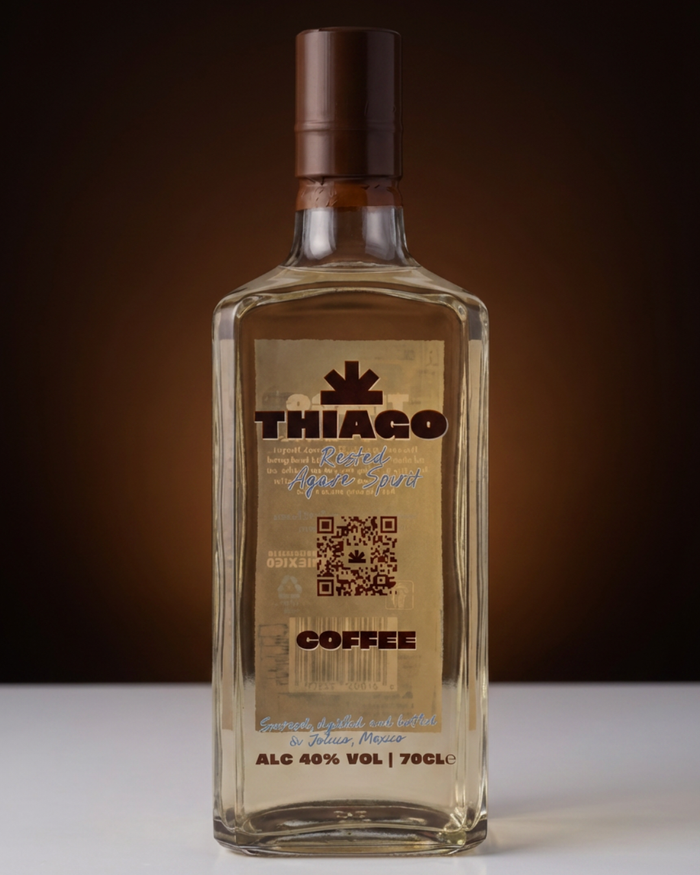
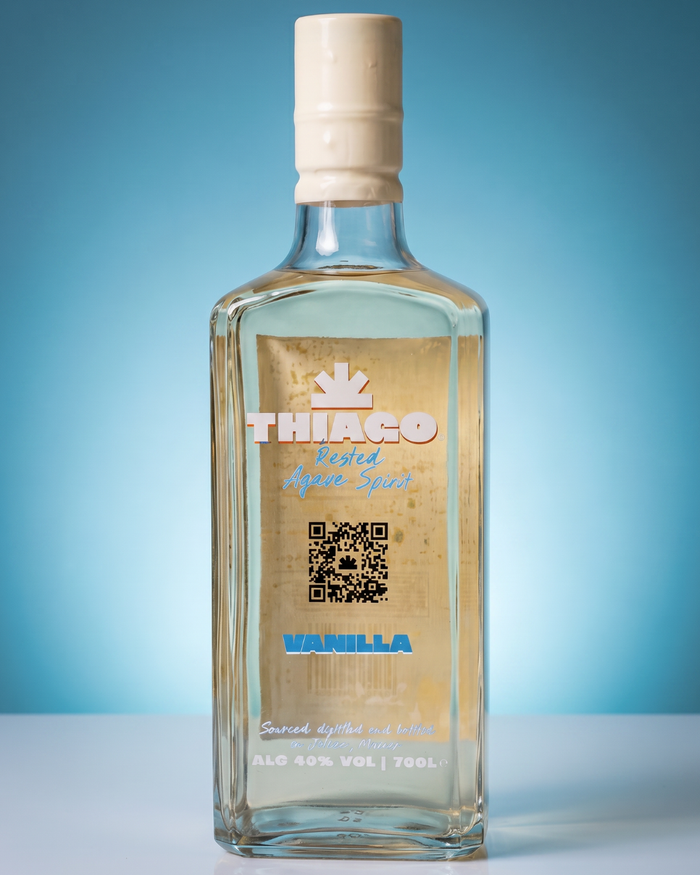
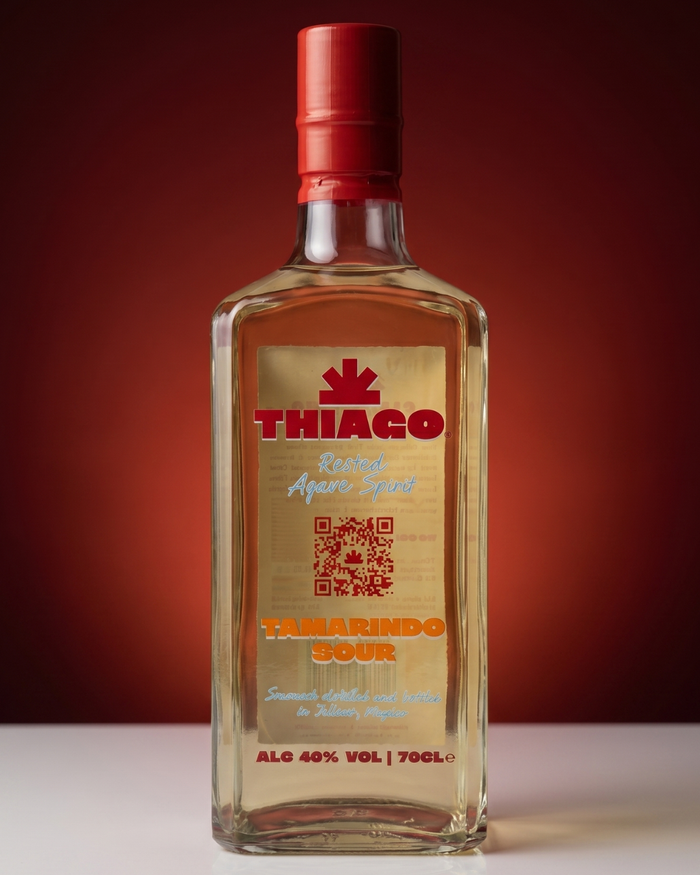
The brands that genuinely endure are not the ones with the cleverest design or the biggest marketing budget. They are the ones whose identity is inseparable from their production reality. We see this clearly in how Thiago Tequila approaches its identity — every element, from the Black Cherry and Tamarind flavours sourced directly in Mexico to the reposado ageing in the highlands of Jalisco, reflects a genuine production decision rather than a marketing afterthought.
Enhance your tequila experience with Thiago
Thiago Tequila is 100% sourced, distilled, and bottled in the highlands of Jalisco, Mexico, using 100% Blue Agave. Our reposado expressions carry natural Mexico-sourced flavours including Black Cherry, Coffee, Vanilla, and Tamarind. Start with the Thiago 3 Pack to explore the range, or visit the Thiago Tequila home to learn more about our story.
Frequently asked questions
What does the NOM number on tequila bottles mean?
The NOM number identifies the registered distillery where the tequila was produced and confirms it meets Mexican regulatory standards.
How can you tell if a tequila is 100% agave from the branding?
Look for the words “100% agave” clearly stated on the label. If that phrase is absent, the spirit is likely a mixto.
Why has premium tequila become so popular?
Rising consumer demand for quality, provenance, and unique flavour experiences has driven rapid growth, with super-premium tequila growing over 50% between 2018 and 2022.
How is tequila branding different from mezcal branding?
Tequila branding focuses on consistency and premium positioning, while mezcal branding emphasises artisanal variety and smokiness rooted in diverse agave species.