There’s a version of coffee tequila most people recognise instantly. Sweet, heavy, and built to impress for a moment before disappearing just as quickly.
It has done the rounds for years, and for a while, it worked.
But tastes change. Once you notice the sweetness doing all the work, it becomes difficult to ignore. The spirit underneath never really gets a say.
Across the UK, drinking habits have been shifting for some time. People are drinking less frequently, but with far more intention. When that happens, expectations rise. What ends up in the glass starts to matter more.
Coffee tequila, when it is done properly, sits right in the middle of that shift. Not as a novelty. Not as something made to be liked quickly. As something that actually holds up.

“Without the right foundation, flavour becomes compensation. A mask.”
So what makes a good coffee tequila, and how is it different from a traditional coffee liqueur?
It starts with the base. 100% Blue Agave, grown and distilled in Jalisco, Mexico — particularly in Los Altos, where altitude and volcanic soil develop a natural sweetness and complexity that lower-altitude agave simply doesn’t reach. Not because it sounds impressive on a label, but because without that foundation, nothing else really works.
From there, it becomes a question of restraint. Real coffee, natural oils from roasted beans, and nothing artificial trying to speed the process up. No added sugar — not as a marketing angle, but as a production decision. Research into the UK flavoured spirits market consistently shows the majority of commercial coffee liqueurs rely on significant levels of added sugar to soften or amplify flavour. Coffee tequila, when produced differently, does not need to.
Sugar will always make something easier to drink. It rarely makes it better. For a long time, the category leaned into that trade-off. That is now being questioned.

“No added sugar — not as a marketing angle, but as a production decision.”
There is a natural overlap here with coffee itself. From independent roasteries in cities like Bristol and Leeds to specialty cafés across Manchester’s Northern Quarter, the best coffee scenes are crafted on patience and precision. The same is true of agave harvesting in Jalisco, Mexico. Both reward time. Both punish shortcuts. And both produce something far more interesting when treated properly.
That is part of the shift. People are no longer just looking for a drink. They are looking for something with a bit more behind it.
You can see it clearly in places like Manchester’s Northern Quarter — one of the UK’s most influential bar districts — where independent venues are becoming far more selective about what earns its place on the back bar. Not just what sells quickly, but what actually performs in the glass. Spirits that work neat. Spirits that still make sense in a cocktail. Spirits that do not rely on disguise.
That shift is not limited to Manchester. It is visible across London cocktail bars, Birmingham’s growing hospitality scene, and independent venues throughout the UK where premium agave spirits are gaining real traction.
The Espresso Martini has evolved with it. Modern versions focus less on sugar and more on balance, structure, and the quality of the base spirit — what some are calling the Espresso Martini 2.0. When paired with a properly made coffee tequila, the dynamic changes completely. You get the bitterness of the bean, the natural sweetness of the agave, and a drink that feels far more deliberate.

“The shot culture that once defined tequila has largely faded. In its place is something more considered.”
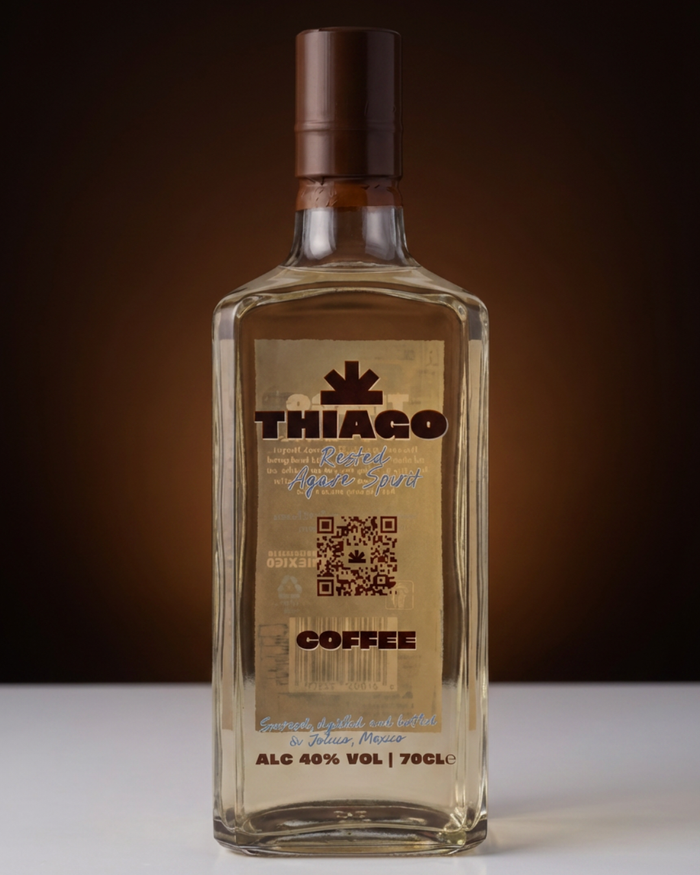
That is where Thiago Coffee sits.
Made on 100% Blue Agave, rested to develop character without losing identity, and enriched with natural coffee — no added sugar, no shortcuts. A structure that allows it to work in multiple ways.
Neat, if you want to understand it properly. Over ice, if you want to slow it down. Or in an Espresso Martini, where the difference becomes obvious very quickly.
The shot culture that once defined tequila has largely faded across the UK and beyond. In its place is something more considered. People are taking their time. Paying attention. Choosing drinks that offer more than just impact.
The best versions do not compete for attention. They hold it.
Coffee tequila, when it is made properly, stands up to that level of scrutiny. It does not need to rely on sweetness or novelty to justify itself. It earns its place through balance, structure, and a respect for the base it is made on.
And that is ultimately what separates it.
Build your Espresso Martini 2.0 on a base that earns it — shop Thiago Coffee.